The Turning Point: Why 2025 Gave Us Reason for Both Hope and Worry
As we close out another turbulent year, I find myself returning to the work of economic historian Carlota Perez, whose framework for understanding technological revolutions offers perhaps the clearest lens for making sense of our current moment.
According to Perez, we are living through the fifth great technological revolution, following the ages of steam, railways, steel and electricity, and mass production. Each revolution follows a remarkably consistent pattern: an “installation” phase driven by financial speculation, followed by a major crash, then—if things go well—a “golden age” of broad-based prosperity. The 1990s and 2000s were our installation period as we moved from the world of cheap energy and mass production to a world of digital goods and personalized experiences. The speculative frenzy, the financial engineering, the growing inequality—all of it was textbook Perez.
Here’s the optimistic case: we are now at the turning point. The problems have surfaced—inequality, regional climate-related devastation; and populist leaders channeling the resentment of those left behind by creative destruction. This ugliness is not unprecedented. It is, in fact, the pattern. And what follows the turning point, historically, has been extraordinary: a golden age like the one the advanced world experienced in the 1950s and 1960s, when prosperity reached broadly across society and lifted workers into middle-income lives. With the wonders of AI, we have the technological capacity to extend that kind of transformation globally, and sustainably, to everyone.
Now the pessimistic case: golden ages don’t happen automatically. They require direction. After World War II, it wasn’t mass production alone that created widespread prosperity—manufacturing tripled in value but increased its workforce by only 30%. The jobs came from services, healthcare, construction, and government. The direction came from deliberate choices: suburbanization, the invention of the 30-year mortgage, the Cold War, and policies that channeled demand. Business learned during the war that mass production requires mass consumption, and government policy made that consumption possible. Businesspeople joined the Committee on Economic Development, a who’s who of thinking at the time, to outline the policies that would make a true middle class prosperous. Would that we had a body like that when the economy went into deep recession in 2008, which Perez describes as a missed opportunity to correct the excesses of the casino economy and align capital with the needs of production. We could be living in a golden age right now!
We have figured out how to navigate through the fraught, unequal, confusing and often violent period of the turning point before. In the Gilded Age, the equivalent of today’s tech billionaires controlled unfathomable wealth even as many of their workers struggled in abject poverty. Finance was decoupled from production and inequality was rampant. The original Gilded Age ended gradually, giving way to the Progressive era(c. 1890s-1920s) due to a combination of severe economic crises like the Panic of 1893, growing public outcry against corruption and inequality, and the rise of muckraking journalists, leading to demands for government intervention and reforms that curbed corporate power, improved labor conditions, and increased social welfare, with World War I solidifying the shift.
Whether we tip toward golden age or prolonged crisis depends on choices we make now. That’s what I’ll be exploring in this newsletter as we head into 2026. I’ll be looking at the early warnings, the bright shoots and the new developments that are signposted along the way, because I am by nature an optimist.
2025 Events
Reinvention Summit
April brought the Reinvention Summit in Dublin, created by Aidan McCullen, Nadya Zhexembayeva and the good people at nineyards. There were incredible insights: exclusive meetings with leaders from New Zealand, Ireland and Norway about the unique innovation opportunities that small countries have, sessions with senior leaders unpacking innovation success stories at Microsoft, and connecting with business leaders at the University College of Dublin about inflection points.
Novartis C-LAB
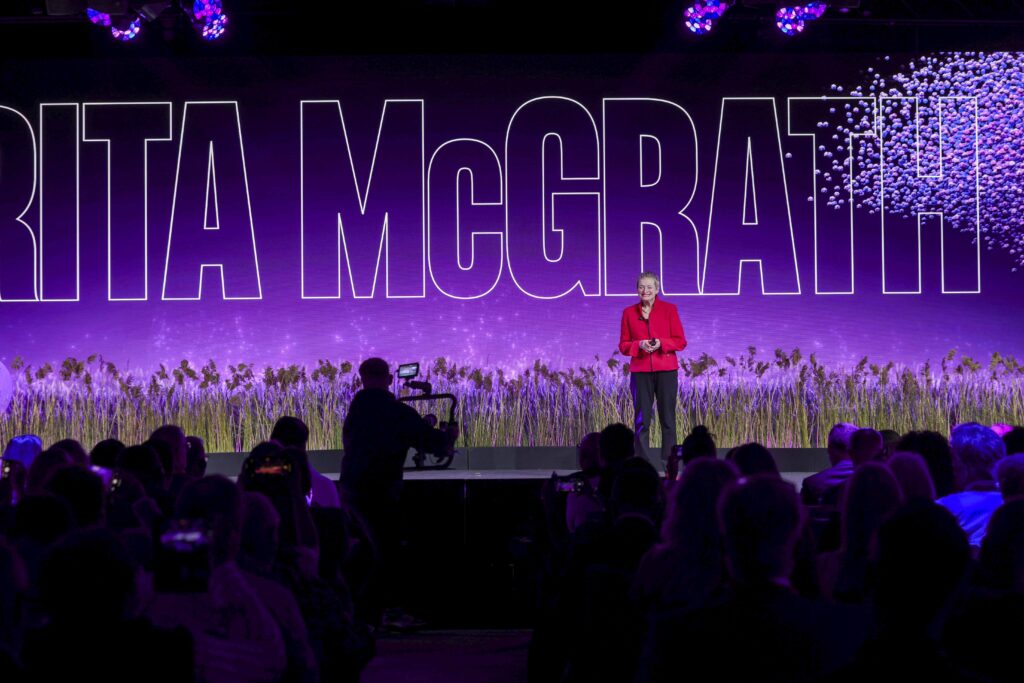
How do you build an “inspired, curious, unbossed” culture? This is the goal that Novartis CEO Vas Narasimhan set when he moved into the role in 2018. Over the past few years, I have been honored to be part of the Novartis’ Culture Leadership Advisory Board, or C-LAB, which brings together very senior people at Novartis, and experts in innovation, strategy, and organizational behavior. This year, we convened in Basel, Switzerland, and got these great lab coats!
Concordia
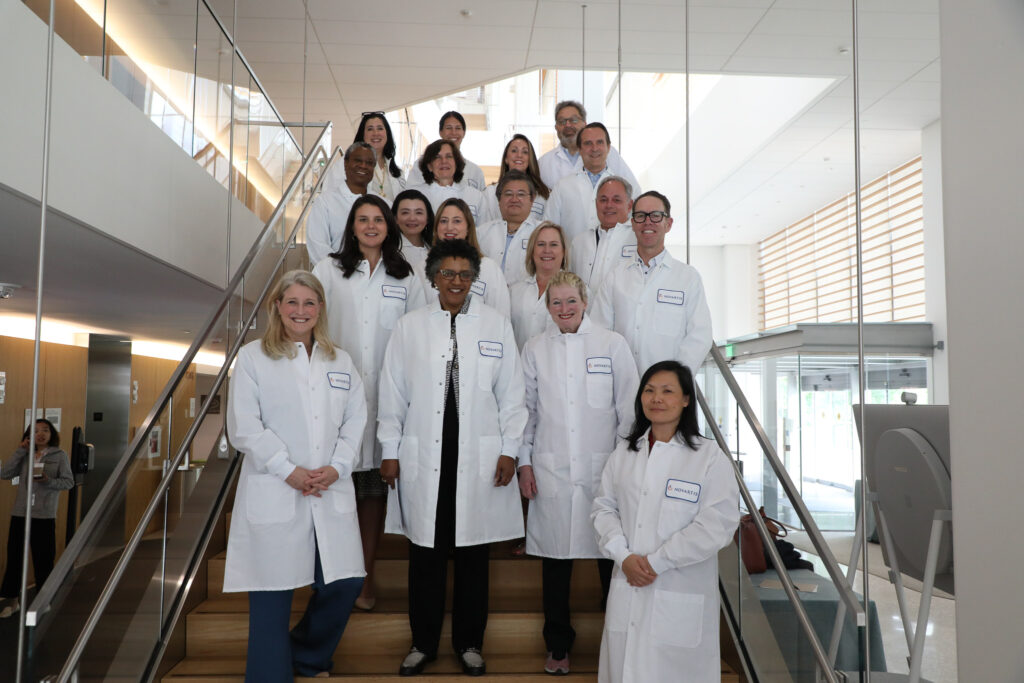
I joined the Concordia Summit for a panel on private-public partnerships discussing how building accountability and trust between the public and private sector is part of the strategic puzzle of societal issues like climate change, geopolitical instability, and the digital revolution.
Fast Company Innovation Festival
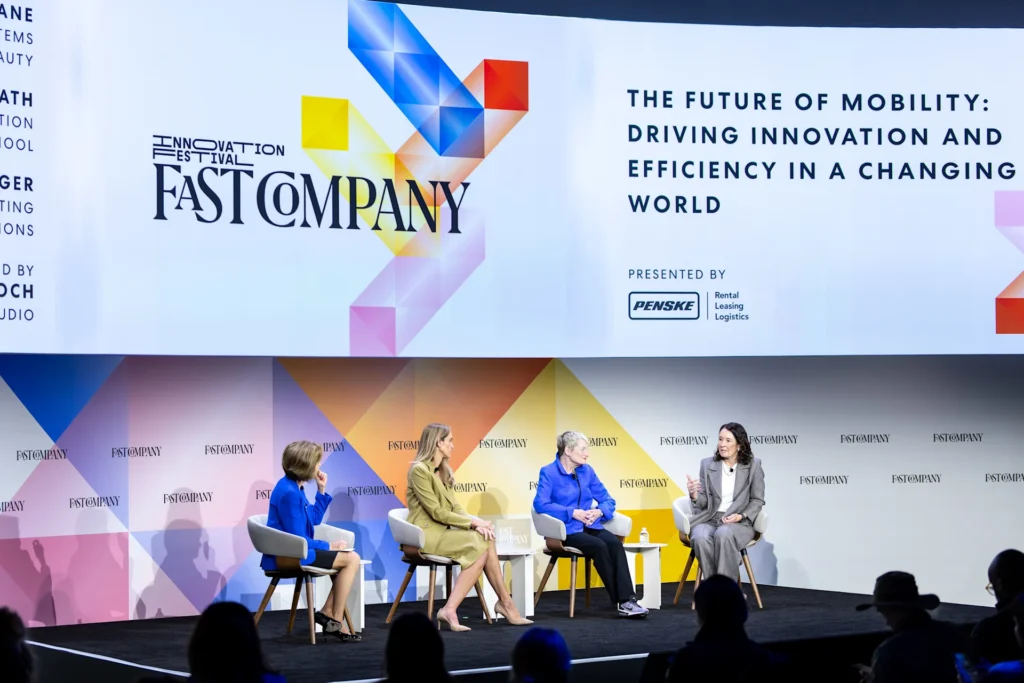
At Fast Company’s Innovation Festival, I spoke on the future of mobility featuring Sherry Sanger, the EVP of Strategy and Marketing at Penske Transportation Solutions and Heather Lane, VP of Supply Chain Strategy and Systems at Ulta Beauty. We talked about the power of AI to help customers and employees – especially with lessons from the COVID-19 pandemic about how supply chains can wear thin.
Thinkers50
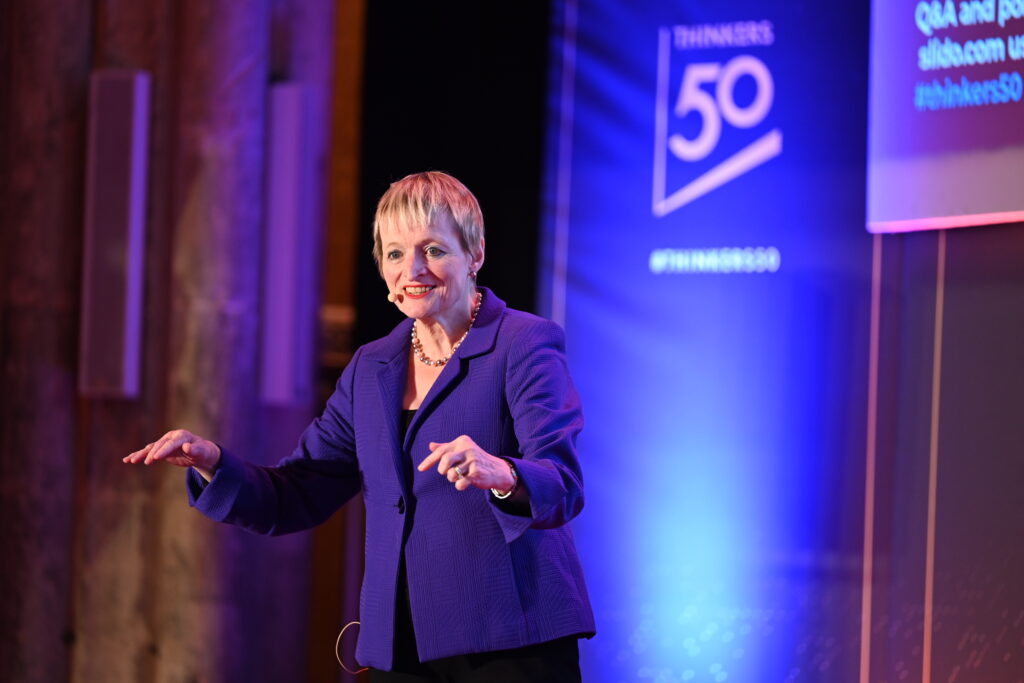
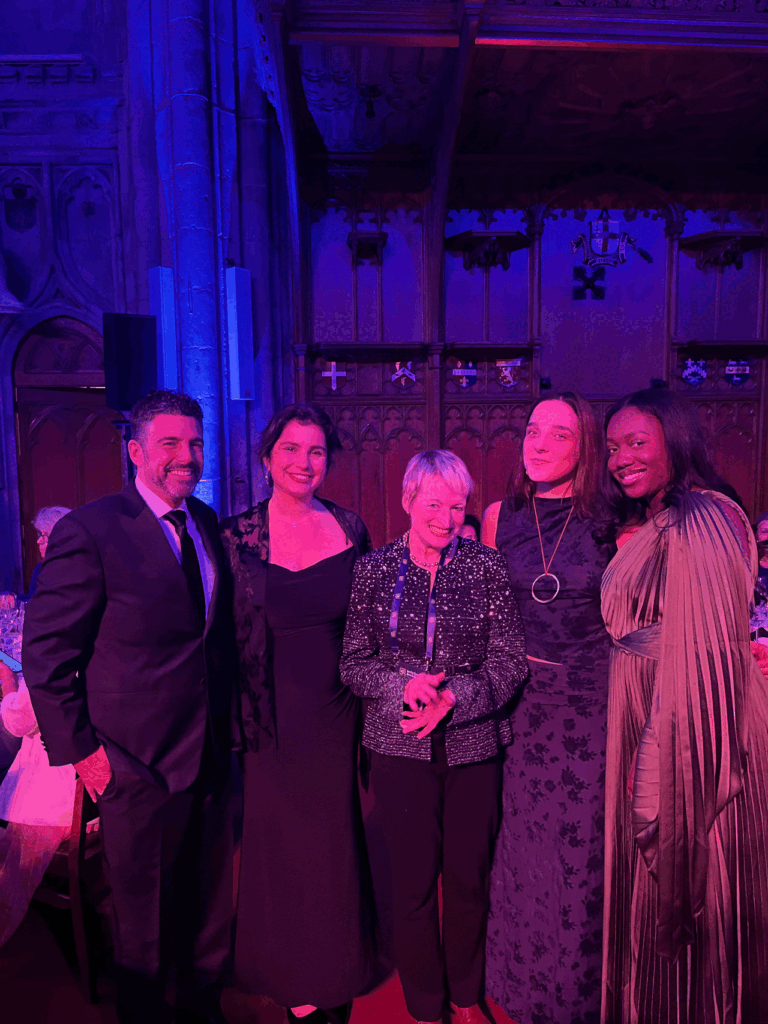
November brought the whole Rita McGrath Group team to London for Thinkers50. This year’s theme was “regeneration”, asking the question: what does it mean to build regenerative organizations, leadership structures, and growth? It was a wonderful gathering of some of the best and brightest in thought leadership, and I’m honored to have been ranked #6 in this year’s ranking of management thinkers!
The Global Peter Drucker Forum
The Global Peter Drucker Forum, an annual event dedicated to continuing the thinking of the late management thinker. We discussed what next generation leadership ought to look like: going beyond traditional control-oriented structures to unleash human energy and creativity, speed things up, and free people to pursue good ideas.
Be Woman
It’s always exciting to cross a new destination off the list: this year, one such destination was Almaty, Kazakhstan. I gave a keynote on transient competitive advantage – the need for organizations to seize new opportunities, exploit them, and turn to new opportunities – for Be Woman, the largest platform for women’s leadership and development in Central Asia. It was fascinating to learn of the reinvention and innovation happening in that region!
LSGC
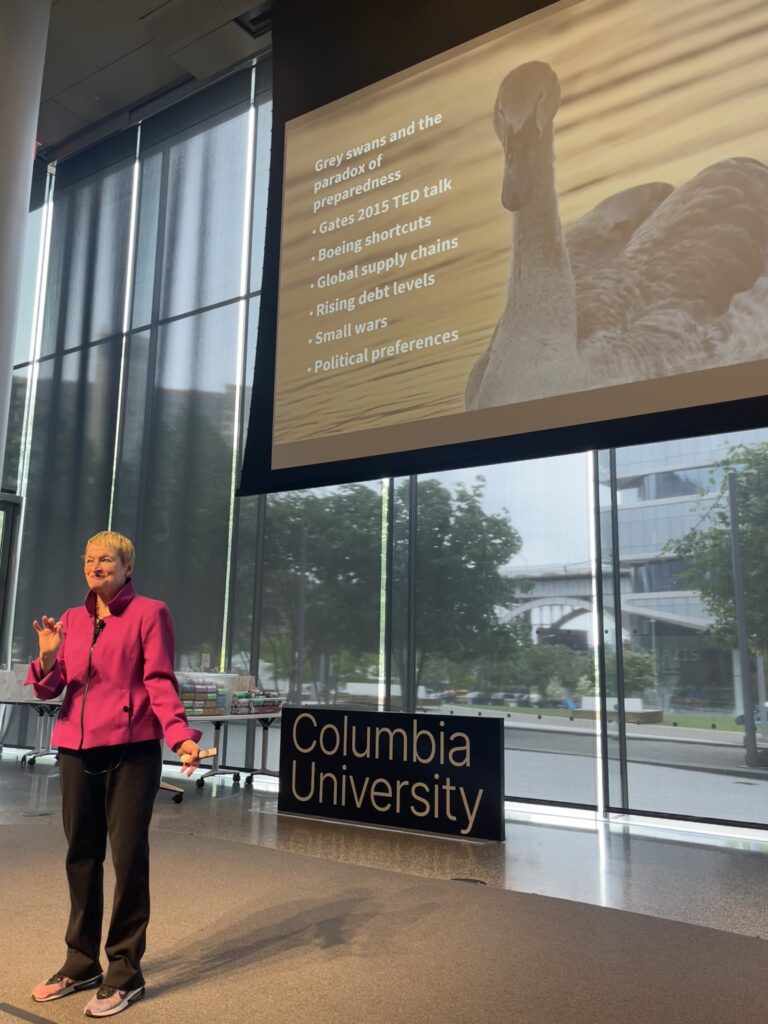
A highlight of the year were my Executive Education programs at Columbia Business School, including my course Leading Strategic Growth and Change. Through 4 weeklong installments, 7 guest speakers, and 100+participants, we got insight in the strategic challenges senior leaders face, and worked to develop actionable solutions.
New Book in the Works
And through all this, in hotel rooms, on planes, trains, and automobiles, I’ve been writing a new book! It’s centered around the idea of permissionless organizations. The case studies pull from across sectors and countries from Swiss pharmaceutical giant Novartis to South Korean finance app Toss andonline platform Shopify.
Stay tuned for more insights as I refine the manuscript and on book launch events later this year!
In the news
What a year for press features, from shedding strategic light on US tariffs and the TikTok ban, to contextualizing generational differences in the workplace and highlighting fading business models. The thing is that without some kind of framework to view what’s going on, it can all seem like total chaos. It’simportant to take a systems view and look at second and third order effects. For instance, as the government pushes universities to eliminateconsiderations of gender in admissions, they may wipe away what is effectively affirmative action for male applications – quite unintentionally hurting white men in the attempt to eliminate DEI programs.
When US tariffs policy shift every week, fashion mergers & acquisitions look to focus on complementary brands.
I started a new article series for Fast Company: the rise of dynamic pricing, how “good enough” products disrupt their premium counterparts, and what the release of AI “actor” Tilly Norwood can teach us about spotting weak signals.
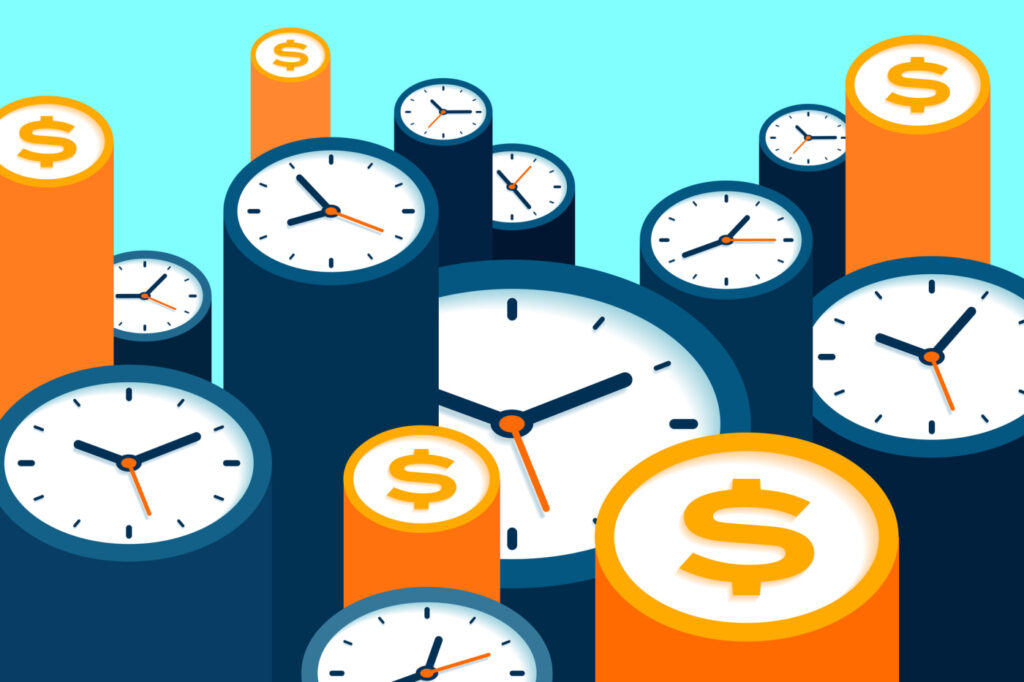
Is the billable hour still a viable business model? When AI can increasingly do the basic work of a professional services firm in minutes, how do we value the human contribution?
64% of Gen Z workers think they could be laid off in the next year, and the impact of a new generation entering the workforce.
Living companies don’t just exist to make money, and more on how Boeing, Kodak, and GE lost their way.
How do you spot inflection points, whether in your work or your personal life? I joined Hidden Brain to discuss.
Thought Sparks
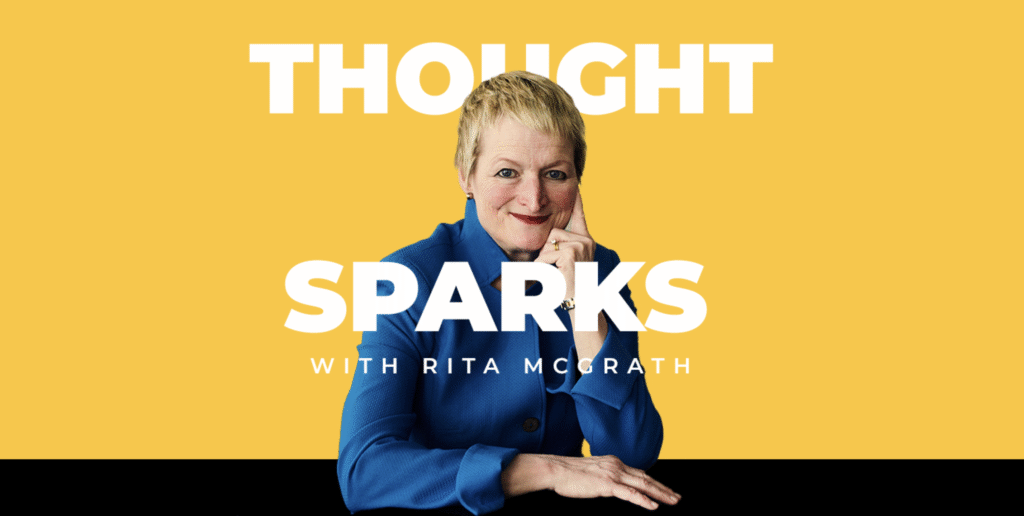
Thought Sparks Podcast
What a year for the Thought Sparks Podcast! Born out of Fireside Chats which we started during the pandemic as means of connecting when we were stuck at home, the Thought Sparks Podcast has expanded to create share insightful actions, strategic ideas, actionable suggestions and innovative approaches that help organizations and leaders master the future with less fear and more confidence. New episodes are published every Tuesday at 11 am EST.
Thank you to all our guests this year for sharing their expertise across fields, asking thought-provoking questions, and broadening our horizons.
Thought Sparks Articles
Here were the 5 trends I predicted for 2025, at this time last year, including dematerialization, deglobalization, and critical demographic shifts.
The party’s over at retail giant Party City – here’s how Build-A-Bear has remained dominant despite the retail apocalypse.
Is AI coming for your job? From Microsoft to Klarna, that remains to be seen. But what we can see are signs that the AI bubble might burst, like the Internet before it.
Writing a book is no longer the guarantee of success and credibility it once was. Have we reached peak book?
Why mergers fail: everything from CEO overconfidence to taking assumptions as fact.
From Adam Smith’s time on, we’ve had the same definition of productivity. How does AI change that, and change what economic activities we find most valuable?
Amid a global pandemic, geopolitical instability, and a recession, it’s no wonder Gen Z is struggling to find their footing.
The clean energy market is reaching a historic inflection point, but the US’s historically dominant position is vulnerable.
Find Thought Sparks on LinkedIn, Substack, Medium, and the Rita McGrath Group website.
Thought Sparks Action Points
A new addition to the Thought Sparks suite are our Thought Sparks Action Points. These are bite-size insights from my conversations with thinkers and leaders on the Thought Sparks Podcast.
Here are Action Points from some past Thought Sparks guests we saw this fall at Thinkers50:
- Dorie Clark on career reinvention and long-term thinking.
- Herminia Ibarra on leadership transitions and the shift from “know-it-all” to “learn-it-all” cultures.
- Martin Reeves on how innovation works – not through heroic inventors but through serendipitous, collective processes involving forgotten contributors.
- Morra Aarons-Mele on the productive and destructive sides of anxiety, especially in modern work and leadership.
- Scott Anthony & Paul Cobban on how DBS Bank transformed from “damn bloody slow” to an innovation powerhouse by embedding innovation behaviors throughout the organization.
- Terence Mauri on transforming disruption into opportunity.
- Tomas Chamorro-Premuzic on how organizations prioritize confidence, charisma, and narcissism over competence, humility, and integrity – traits that predict effective leadership.
Tools – Team Effectiveness Survey
Team effectiveness is the key to unlocking profit and productivity, but too often, how you achieve effectiveness eludes leaders and team members alike. (Although I’m sure anyone could identify when their team has been INeffective). In my research, I’ve found that you can gauge a team’s capability based on evidence of 5 factors.
Roles: People with the right skills and capabilities, in the right roles.
Trust: Confidence and trust in one another.
Information: Fluid and dynamic information flows.
Commitment: Mutual commitment to the team’s goals .
Psychological Safety: Comfort in speaking up.
Take this quick survey to understand our approach to Team Effectiveness. If you’re interested in team effectiveness solutions for your organization, be in touch with seth@ritamcgrath.com
Upcoming Events
Columbia Executive Education
How do you drive innovation and growth? Leading Strategic Growth and Change, my Executive Education course at Columbia Business School, is designed to help executives spot new opportunities early, adapt strategy in real time, and guide their teams through complex transformations.
Join us for weeklong sessions running March 23-27, 2026 and June 15-19, 2026, on-campus in New York. Make sure you save your spot!
Thought Sparks Podcast
2026 is shaping up to be a great year for the Thought Sparks Podcast! In the new year, look for episodes featuring Thinkers50 Radar Award winner Neri Karra Sillaman, former Girl Scouts CEO and literal rocket scientist Sylvia Acevedo, and Stanford’s Rob Siegel. Find Thought Sparks anywhere you get your podcasts!