
Only one in four employees is fully engaged at work—a staggering indictment of our current leadership models that represents a massive hemorrhage of human potential. Jose Marcilla, Novartis executive and author of the new book Unlimited Leadership, makes the case that we need a fundamental disruption in how we lead, shifting from outdated command-and-control models to humanistic approaches grounded in empathy, authenticity, and purpose.
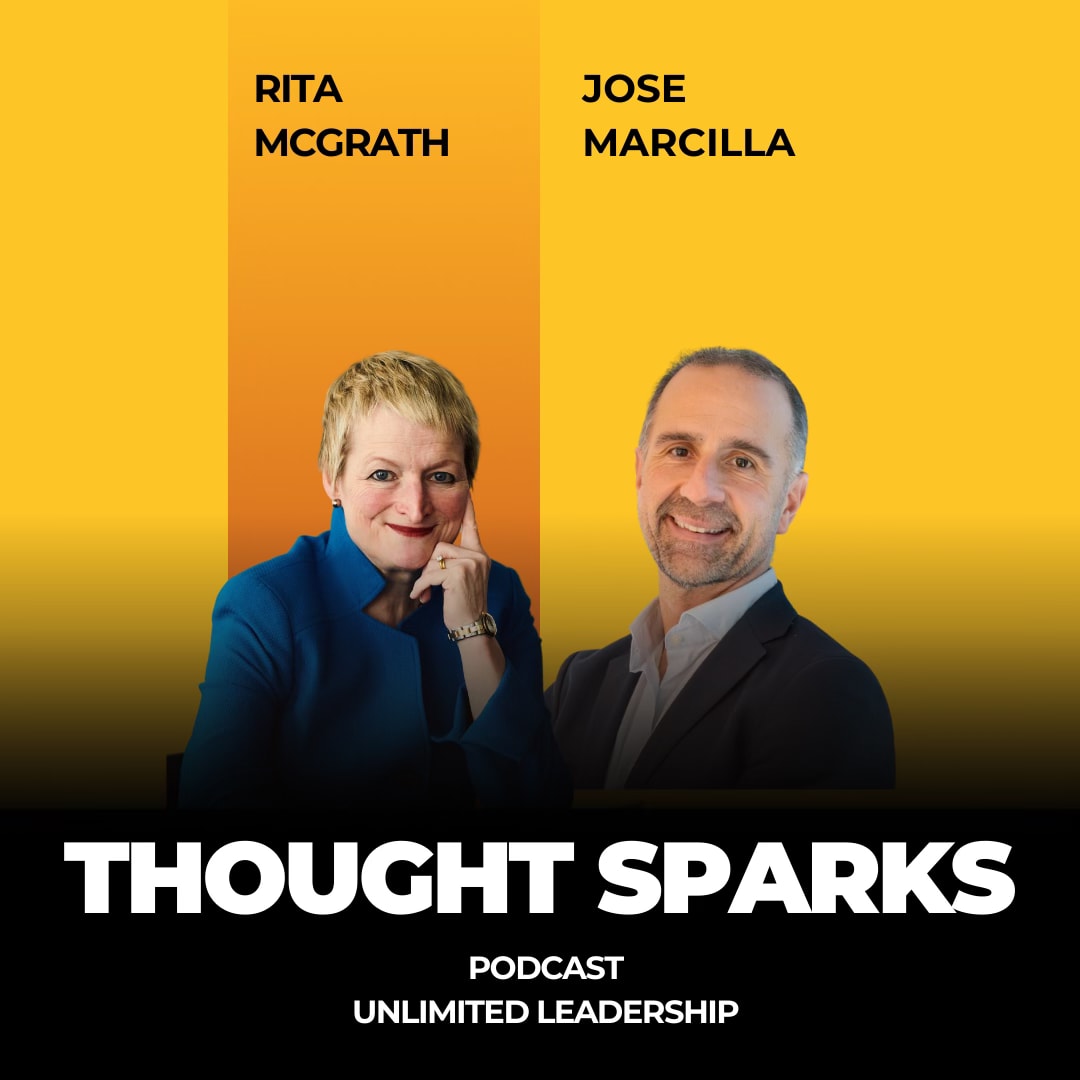
I recently had a conversation with Jose Marcilla that reminded me why leadership matters more than ever—and why we’re getting it so spectacularly wrong. Jose is an executive director at Novartis, overseeing Latin America and Canada, and author of Unlimited Leadership. Over 25 years leading teams across five countries, and managing through geopolitical crises, he’s distilled his experience into wisdom that starts with a damning statistic.
The Leadership Crisis Hiding in Plain Sight
“When you look at the data that every year is published, only one out of four employees are fully engaged with their companies,” Jose told me. “The amount of human capital that is lost in the organizations is massive.”
Three-quarters of your workforce is checked out—not from laziness, but because we’ve failed to inspire them or create environments where they thrive. “This reflects probably the old kind of leadership style that still exists in many organizations,” Jose said.
We’ve disrupted music, insurance, entire industries. But leadership? We’re still operating with frameworks built for a world that no longer exists.
From Tetris to Minecraft: Understanding the Generational Shift
Jose offered a compelling insight through video games. “Most of us played a game called Tetris. You have seven pieces coming, and the objective was to make a line. It was kind of predictable. When I look at my Violeta, she is now 13, Jose, eight. They haven’t played Tetris, but they play Roblox or Minecraft, and these games are open. You can go whatever you want. You can set up your objective.”
“As leaders, we were trained on a Tetris mindset, whereas the young generations are more in a Roblox kind of space,” Jose said. “Leaders need to change our algorithm.”
Young people aren’t less ambitious—they operate from a different mental model prioritizing purpose over prestige, impact over incremental advancement. The biggest risk Jose sees? “They are not taking enough risks.” Why? Organizations haven’t created frameworks allowing open-ended exploration with developmental support.
The Impossible Balancing Act (That Isn’t)
The schizophrenic demands we place on leaders—be decisive but vulnerable, demanding but empathetic—aren’t actually contradictions.
“I haven’t seen any great leader that does not have a well-balanced personal and professional life,” Jose told me. He follows the “I-We-It” framework: “The It is your job. There are two other important pillars, which is the We, my family and friends, and the I, which is the things that I like.”
“I would invite all of you to analyze in your calendar every week how much time you are spending on the It, your job, on the We, family and friends, and on the I.”
Jose does daily reflections: “A moment of reflection at the end of every day is something that I do in order to analyze what I did well and what I could have done differently.”
When leading through crises, his learning was clear: “Focus on what you can control. There are many things in the world that are outside of our control zone. It’s important for leaders to have clarity, to have a vision, and to really focus the efforts of the organization and their teams in what is within your scope.”
The Power of Breadth Over Depth
Jose attributes much of his effectiveness to breadth rather than depth. “One of the beauties of my career is the breadth, and not always the depth. In this area of machine learning, AI, the value is going to be more on the questions than in the answers, and the ability of leaders to have a breadth across all sectors is going to be key.”
Despite 25 years in pharmaceuticals, Jose spends roughly 25% of his time talking to people in other industries. “I learned a lot, and that helps me to connect the dots.”
This pattern-recognition capability—seeing connections across domains—is increasingly valuable as problems grow more complex and interdisciplinary.
The Mentorship Multiplier
Perhaps the most actionable insight from our conversation involved mentorship. “Young leaders with mentors accelerate five times their careers versus people who don’t,” Jose shared. “I have not only one but two. My invitation to all the young people is, find a mentor.”
And here’s where I added something: “Get a sponsor, you know, get somebody who’s going to talk about you when you’re not in the room. Get somebody who’s going to actively put you forward for opportunities.”
The distinction matters. A mentor provides guidance and wisdom. A sponsor provides access and advocacy. Both are essential, and neither should be left to chance or organizational assignment.
Jose’s purpose in life is to “develop leaders to impact the world.” The book itself is both a distillation of his experience and, touchingly, “a gift for my children to also understand what their dad was doing.”
Moving Forward: What This Means for Your Organization
Several considerations emerge for leaders at all levels:
Audit your leadership algorithms. Are you still operating from Tetris-era assumptions? The world has moved to Minecraft.
Implement the I-We-It framework. Examine your calendar this week. How much time went to your job, to relationships, to personal renewal? If wildly out of balance, you’re modeling unsustainability.
Measure what matters. That one-in-four engagement statistic is a crisis. Track it, connect it to leadership effectiveness, and stop promoting people who deliver results while leaving disengagement in their wake.
Build breadth systematically. Create structures encouraging cross-industry learning and job rotation. The future belongs to leaders who connect disparate dots.
Institutionalize mentorship and sponsorship. Jose’s five-times acceleration statistic isn’t just compelling—it’s actionable evidence this should be strategic priority.
Simplify your strategy. Can everyone articulate where you’re playing and how you’re winning? If not, you have a communication problem.
The case for unlimited leadership is grounded in brutal reality: massive human capital waste, changing generational expectations, and increasing complexity. The old algorithms aren’t working.
As Jose reminded me, “People forget what you will do, but people never forget how you treat them.” That’s not just a leadership principle—it’s a choice we make every day.
References:
-
Marcilla, Jose. Unlimited Leadership. Editorial Letra Minúscula, 2025.
Listen to the full Thought Sparks conversation: S6, E8 with Jose Marcilla