Dear friends,
Imagine this. You have presided over a long, sad stretch of corporate “meh.” #5 in your category. Unbeloved by your parent organization. Spurned by every potential acquirer, even with your owner desperate to unload your business. And then, out of the blue, the situation changes. You get bought, for a decent premium, by a company nobody ever looked at seriously, based in China. I mean, they weren’t even in the competitive set at the time this happened in 2016.
As the CEO, you brace yourself for the standard playbook. There would be new leadership parachuted in. The new parent would install their management systems. Your own job will be none too secure, nor will that of any of your management team. Cost-cutting is probable. So is changing the beloved brand name, logo and so much of what you staked your identity to. In other words, it’s the acquirer’s way or the highway. So, you brace yourself to head to China to hear what’s going to happen and how bad it will be. Instead, the chairman of your new parent company starts talking to you about… salad.
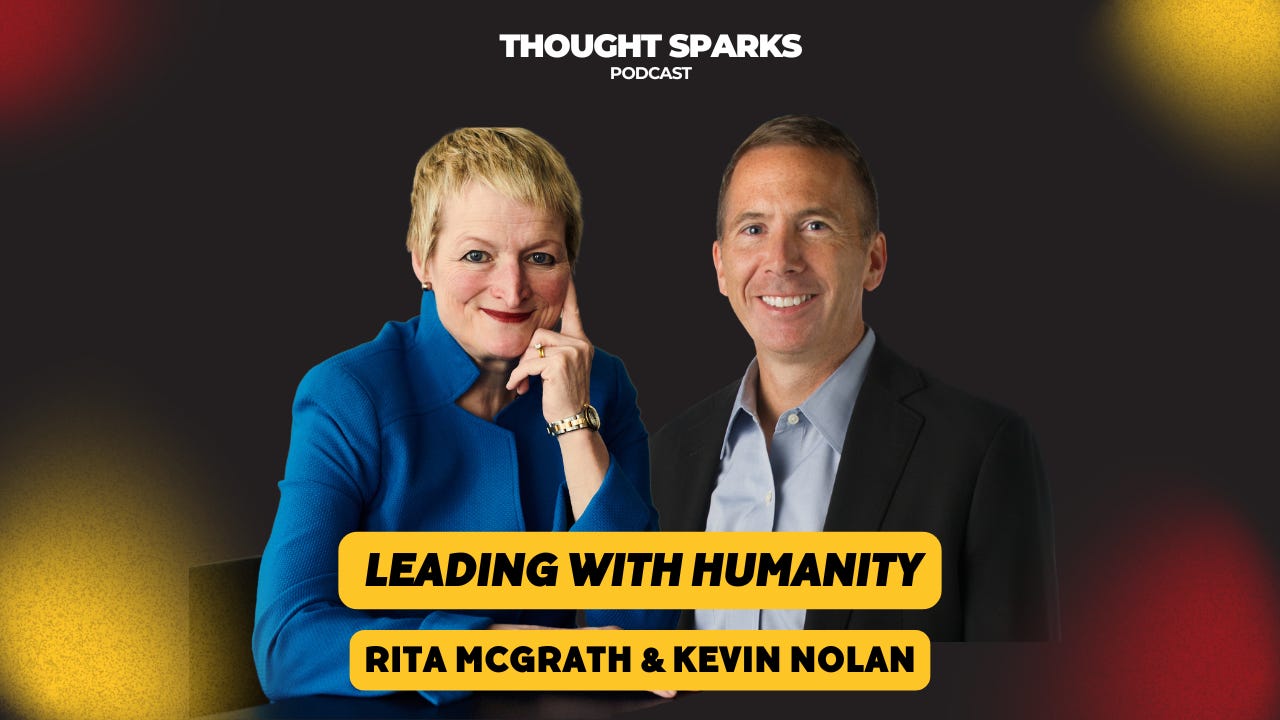
That was Kevin Nolan’s introduction to Haier, the Chinese appliance giant that bought GE Appliances a decade ago. Zhang Ruimin’s “salad management” philosophy — same base ingredients everywhere, but every market adds its own dressing — was Kevin’s first clue that this acquisition would be unlike anything in the Western M&A playbook. Haier paid $5.4 billion and then, astonishingly, told the team: it’s your market, you figure it out.
In my next episode of the Thought Sparks Podcast, Kevin, an engineer’s engineer who rose from CTO to CEO, tells the story of what happened when a business GE had “fallen out of love with” was set free. Same people. Same managers. Zero acquisitions. And a journey from fifth place in the American appliance market to number one in just five years.
A few things you’ll hear us dig into:
• The “leading goal” idea: why Haier insists you commit to a goal you don’t yet know how to achieve, and why most executives find that almost impossible.
• FirstBuild, the radically open innovation engine where Kevin has zero control over what gets worked on, and why he became convinced he was “the last person on earth” who should be green-lighting projects.
• How Nugget Ice — yes, the chewable kind — became a runaway hit that forced GEA into an entirely new small-appliance business
• The “divide by zero” theory of innovation: if innovation costs effectively nothing, you can do as much of it as you want
• Why Kevin believes the surest sign a corporation is in trouble is a gleaming new headquarters building
We also revisit Chris Argyris’s Model I and Model II — an insight from the 1970s that, hit me like a “like a ton of bricks.” My whole career, I’ve been believing that people want to operate in Model II, where they are honestly testing and learning from the environment and giving one another valuable feedback. Instead, it seems most of us work in Model I, where pleasing others in the organization takes precedent over the truth.
We also talk about humility, micro-enterprises, U.S. manufacturing, and why the most dangerous place to be from a competitive standpoint can be number one.
It’s a masterclass in leading with humanity, from the protagonist himself. Watch this space — the full episode drops tomorrow, and you as subscribers get the news early.
Warmly,
Rita